Is Social Media for You?

I occasionally get invited to talk to local community groups and professional associations about social media – specifically, using social media to enhance their businesses.
I suppose people expect enthusiastic evangelism, hard selling, and a deep dive into social media strategies and tactics. Not so much.

Don’t get me wrong: I love social media. I use it, study it, teach it, research it, live it, breathe it, and have fun doing so. But I always start these presentations with an invitation to first think things through, and decide if social media is for you.

Here are the things I ask people to consider:

Your AUDIENCE -Who do you want to reach? Identify your specific stakeholder groups, and rank them in decreasing order of importance. Then, ask: Are they online? Do they use social media? What media do they use, specifically? Are they always connected, or people who only have Internet access at the end of a busy and exhausting day?

Your GOALS – What do you wish to accomplish? If there’s one thing you wish each stakeholder group to remember about you, what is that?

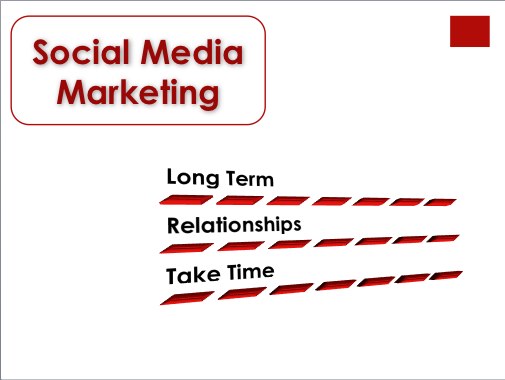
YourSELF – Social media takes time. It is a long-term commitment. Done right, it requires a change of lifestyle. Are you ready to invest the time and effort? The first 5 blog posts are very easy to write. But the 500th? Can you keep up the enthusiasm and generate content over the long run? Are you always connected? Do you have a smartphone? A digital camera? Or, do you have a lifestyle that keeps you away from the computer for most of the day?


I ask my audience to ponder these questions, and make an informed decision about what they want to do. Then, I provide incremental solutions, starting with what I think is the easiest/most familiar to them. Each person can pick and choose a social media solution that fits them best.

I am getting a bit tired of hearing consultants sell social media as a panaceum, and get people into a social media program they are not then able to sustain. I guess you can’t expect a person who makes a living this way to start a sales pitch with reasons why you shouldn’t buy… but that’s the approach I take. Oh, and then… sure, I move on to social media strategies and tactics.

Collaboration through Technology in Teaching and Research

This paper is for NCA 2010. It presents solutions for collaboration in the public relations campaigns course and in research.

NCA2010_1_CollaborationThruTechnology http://d1.scribdassets.com/ScribdViewer.swf

Buying eyeballs

I was just about to rant (OK, comment) on the practice of buying eyeballs. It goes like this: Leave a comment on my blog post and something good will happen (we’ll donate to a cause, enter you in a drawing for a prize, etc.). From a marketing perspective, is this how you want to get eyeballs? Is this a valid assessment trick for counting how many eyeballs you get?

Then, I realized that I was offering a small prize for comments on my teaching blog – these are important class instructions and I wanted confirmation that students saw them. Good educational practice?!

So then, I will no longer complain about Iams buying eyeballs. Come on, give them your pair of eyeballs and they will donate 25 meals to animals in shelters! (oh, and enjoy Pawcurious, it’s become one of my favorite blogs)

Online indentity management & social groups

I came across this presentation on John Bells’ blog (John Bell heads the Digital Influence Team at Ogilvy PR) and had to share it here.

This happens to be one of my research interests, something I alluded to in an earlier blog post, and I am now working to get ready for publication.

The presentation is from Paul Adams, senior UX researcher at Google. I love the connection he makes between social science and social interface/product design. I love the fact that this kind of research happens in a corporate setting, and if I didn’t love teaching so much I’d be jealous of his job.

Social media to the rescue: YouTube project to help bullied gay teenagers

An Indiana teenage boy committed suicide earlier this month, after being bullied in school for being gay. Sad, sad, sad, sad.

I will refrain from comments, opinions, and things I think we should do. I’m writing this post to draw attention to this YouTube project – an effort to reach out to kids in rural parts of the country who may not have access to in-person support: the It Gets Better Project. Gay adults can post videos telling teenagers that… it gets better.

Although I can’t claim to be able to relate to the experience (I grew up in Romania, where bullying wasn’t the norm, as far as I know; I’m not gay) – if I can help, let me know. I live in Indiana – if you’re a teenager happening upon this post, and if you need help or just companionship – send me an email. I’d feel privileged to be your friend.

And for those who are wondering about the relevance of this post to the mission of the blog (well, you know what, it’s my blog, I can post whatever I want) – this is an interesting case study about social media being used to help people.

Note: Don’t even bother to post homophobic comments, I’m telling you upfront that I won’t publish them.